

Carry-On Garment Bags
Carry-on garment bags help travelers move suits, dresses, shirts, and event clothing with fewer tight folds than ordinary luggage. The best format depends on the fully packed airline dimensions, garment length, trip duration, carrying method, and how shoes or toiletries are separated from formalwear.
Read the Full Carry-On Garment Bag Buying Guide ↓
Carry-On Garment Bags: Quick Buying Answer
Start with the operating airline’s current cabin limit and measure the bag in its closed, fully loaded shape, including wheels and handles. Then confirm that the open garment panel fits the longest suit, jacket, or dress. Choose a traditional folding carrier for garment-first travel, a convertible garment duffel for a mixed short-trip wardrobe, or a rolling garment bag when airport mobility matters more than minimum empty weight.
As an Amazon Associate, we may earn from qualifying purchases.
What Counts as a Carry-On Garment Bag?
A garment bag does not receive a universal airline exemption simply because it contains formal clothing. It normally counts as one of the passenger’s permitted bags. A soft garment carrier may qualify as a personal item only when the packed bag fits the airline’s under-seat allowance. Cabin closets can be limited or unavailable, so plan for an overhead bin or permitted under-seat space.
Always verify the operating carrier and fare close to departure. Partner flights, regional aircraft, and full cabins can change available storage. Our airline rules guide for garment bags explains measurement, item counts, and boarding contingencies.
Traditional Carrier, Garment Duffel, or Rolling Bag?
| Format | Best starting use | Main tradeoff |
|---|---|---|
| Traditional folding carrier | Several suits or garment-first travel | Less room for casual cargo |
| Convertible garment duffel | Formal and casual clothing in one short-trip bag | Central load may press into garments |
| Rolling garment bag | Long terminals and frequent business trips | Added frame weight and exterior hardware |
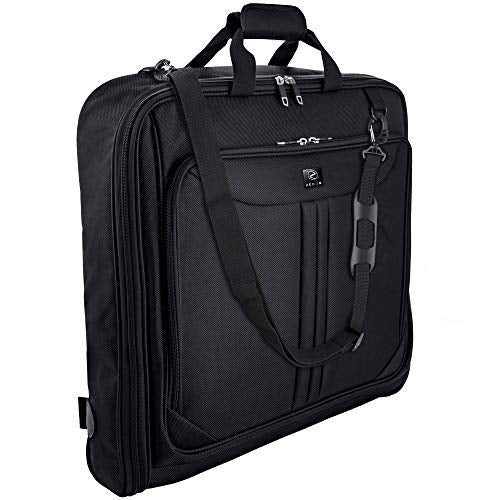
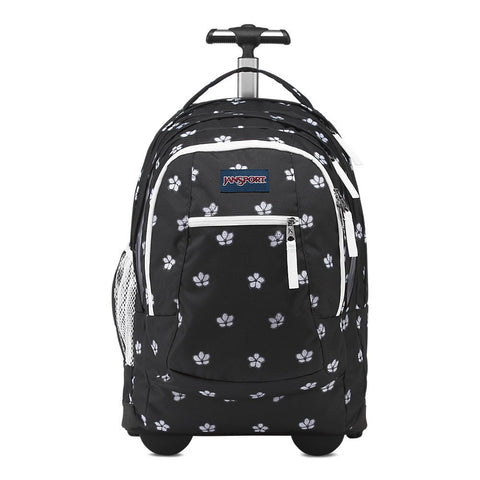
The traditional format creates a long hanging panel that folds in two or three sections. A garment duffel wraps that panel around a weekender compartment. A roller adds wheels and a telescoping handle. Compare the complete trip rather than selecting the design with the most features.
Measure the Packed Bag, Not the Empty Shell
Product specifications may list open garment length, closed travel dimensions, or both. Neither predicts the final depth after shoes, toiletries, and folded clothing are added. Pack the actual list, close every compartment without forcing it, and measure the maximum length, width, and depth. Count wheels, feet, side handles, top handles that do not retract, and filled exterior pockets.
The carry-on garment bag size guide provides a practical home measurement test. If the bag is close to an airline limit, leave margin instead of relying on squeezing a carefully packed suit into a sizer.
Garment Length, Capacity, and Fold Control
Measure the longest garment from hanger to hem. A business jacket, long dress, coat, and wedding gown create different requirements. More advertised suit capacity is not always better: thick wool jackets occupy more room than light shirts, and overpacking can create more pressure and creasing.
Look for a secure hanger fixture, internal tie-downs, smooth lining, protected zipper edges, and fold bars that guide the bag around broad curves. The goal is controlled movement and fewer sharp folds—not an unsupported promise that clothing will remain perfectly wrinkle-free.
Organize Shoes, Toiletries, and Electronics
A shoe compartment should keep soles away from clothing without protruding deeply into the garment panel. Liquids need sealed pouches even when the bag includes a wet pocket. Belts, jewelry, chargers, and hard toiletry cases should not create pressure points against jackets or dresses.
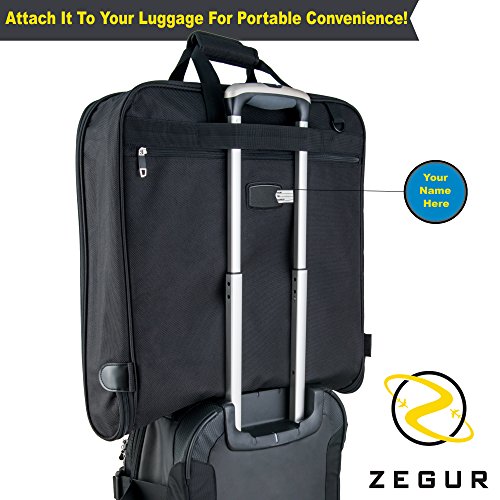
Laptop storage can be useful for business travel, but check padding, security-screening access, and how the device changes balance. A trolley sleeve is often more valuable when the garment bag will ride on a separate roller.
Materials, Hardware, and Weather Protection
Polyester, nylon, canvas, leather, and synthetic leather can all be suitable when construction matches the use. Inspect handle anchors, shoulder-strap clips, edge binding, zipper ends, hanger hardware, wheel housings, and the fold lines that receive repeated stress.
Water-resistant fabric can slow light rain, but ordinary seams and zippers are rarely waterproof. Use an internal protective layer for vulnerable garments, documents, and electronics during wet transfers. Review our material and durability guide for a closer inspection checklist.
Pack for Fewer Preventable Wrinkles
Clean and fully dry clothing before packing. Smooth sleeves and hems, align structured pieces, secure the hanger area, and keep hard items separate. Fold the carrier only at its intended points and remove an item if the zipper bows or the formalwear stack is being crushed.
At the destination, hang garments promptly and use only fabric-appropriate pressing or steaming methods. The complete garment bag packing guide explains a practice-pack process that identifies pressure points before travel.
Complete Carry-On Garment Bag Guide Library
Use the guide that matches your next decision:
- How to Choose a Carry-On Garment Bag: Complete Buying Guide
- Can You Bring a Garment Bag on a Plane? Airline Rules Guide
- How Convertible Garment Duffel Bags Work for Travel
- Garment Duffel vs Traditional Garment Bag: Which Is Better?
- How to Pack a Carry-On Garment Bag to Reduce Wrinkles
- Carry-On Garment Bags for Suits, Dresses and Formal Events
- Rolling Garment Bag Carry-On Guide: Wheels, Size and Weight
- Best Carry-On Garment Bag: Features to Compare
- Carry-On Garment Bag Size Guide: How to Measure Correctly
- Carry-On Garment Bags for Men and Business Travel
- Carry-On Garment Bags for Women, Dresses and Wedding Travel
- Garment Bags With Shoe Compartments: Packing and Organization
- Carry-On Garment Bag Materials: Durability and Water Resistance
- How to Clean and Store a Carry-On Garment Bag
- Garment Bag vs Carry-On Suitcase: Which Should You Use?
Frequently Asked Questions
Can I take a garment bag and a suitcase on a plane?
Only when the two pieces fit within the fare’s permitted bag count and dimensions, or one is checked. A garment bag usually counts as a carry-on rather than an extra free item.
Are rolling garment bags allowed as carry-ons?
They can be when the complete packed dimensions—including wheels and handles—meet the airline’s current allowance.
How many suits fit in a carry-on garment bag?
Capacity depends on garment thickness, interior width, fold design, and the space taken by shirts or accessories. Test the exact clothing list instead of relying only on an advertised count.
Is a convertible garment duffel better than a traditional carrier?
It is better for a mixed short-trip wardrobe. A traditional carrier is usually the stronger starting point when several suits, long dresses, or garment separation dominate.
Final Buying Advice
Choose the smallest manageable bag that holds the real garment list without severe compression. Verify packed airline dimensions, garment length, fold design, carrying comfort, organization, hardware, and weather strategy. Current product details and airline policies can change, so confirm both before purchasing and again before travel.