


How to Choose a Cartoon Backpack for School
Quick Answer: Choose a cartoon backpack for school by measuring the student’s largest folder, binder, lunch container, and device before comparing backpack dimensions. The bag should fit the required supplies without hanging far below the waist, and it should have two adjustable padded straps, a wide opening, dependable zippers, and an easy-to-clean exterior. Treat the character design as the final filter after size, fit, and function.
As an Amazon Associate, we may earn from qualifying purchases.
Browse cartoon backpacks for school on Amazon, then use the checks below to identify which options are genuinely school-ready.
Start With the School Supply List, Not the Character
A favorite cartoon can make a student excited to carry a backpack, but it cannot make a small bag hold a full-size folder. Start by placing the usual school-day items together: folder or binder, notebooks, pencil case, lunch, bottle, library book, device, change of clothes, and any after-school gear. Measure the tallest, widest, and thickest items.
Compare those measurements with the bag’s listed dimensions and opening. Exterior height can be misleading when a backpack has a curved top, padded seams, plush features, or a molded character face. Leave enough space so folders load without bending and zippers close without strain.
Cartoon Backpack Size by School Stage
| School stage | Typical contents | Most important checks |
|---|---|---|
| Preschool or daycare | Snacks, small bottle, spare clothes, comfort item | Low empty weight, simple zipper, chest fit, easy cleaning |
| Early elementary | Full-size folder, lunch, bottle, pencil case, one or two books | Folder-friendly interior, wide opening, padded straps |
| Upper elementary | Binders, notebooks, device, lunch, larger bottle | Structured base, organization, device protection, locker fit |
| Middle and high school | Multiple subjects, laptop, chargers, personal items, activities | Full-size capacity, reinforced straps, laptop sleeve, adult-like styling |
These stages are a starting framework, not a substitute for the school’s actual list and the student’s body size. Children in the same grade can have different torso lengths and daily loads. Choose the smallest bag that comfortably fits the required items rather than buying a very large pack for hypothetical future needs.
Printed, 2D, 3D, or Plush: Which Style Works Best?
Printed character backpacks
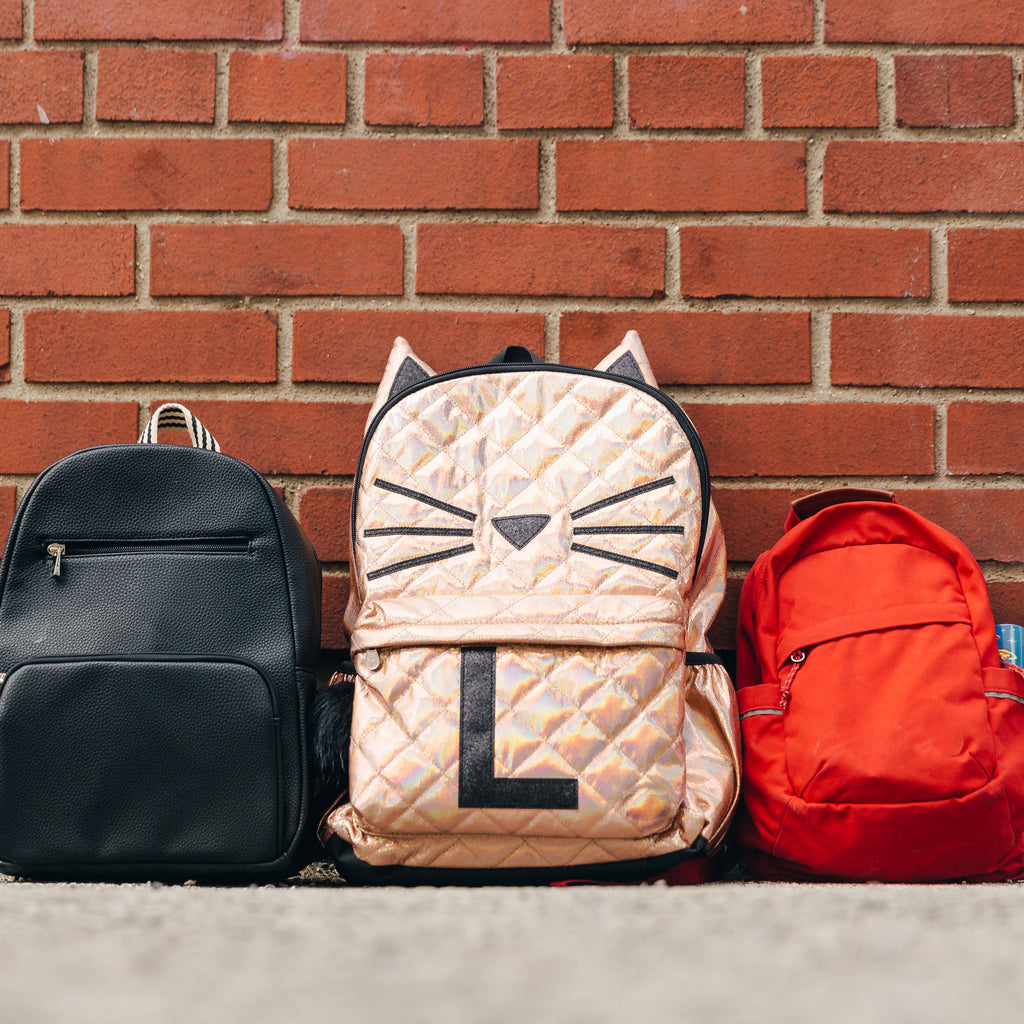
A flat printed design is usually the easiest school format. It adds little external bulk, fits cubbies and lockers more predictably, and can appear on both small and full-size bags. Evaluate print durability, fabric, and overall construction just as you would on a plain backpack.
2D cartoon-looking backpacks
These use bold outlines and optical-illusion art to look like a drawing. They often appeal to older students who want cartoon style without a preschool character bag. Our 2D cartoon backpack style guide explains their pop-art construction and use cases.
3D character backpacks
Raised faces, ears, bows, wings, spikes, and molded panels create a strong character effect. They can work for school, but decorations may add depth, snag, block zippers, or reduce usable space. See our complete guide to 3D cartoon backpacks for school before choosing a highly dimensional design.
Plush and character-shaped backpacks
Plush bags are soft and fun, but many are designed for toys, snacks, or outings rather than folders. Character-shaped interiors often lose the rectangular corners that school supplies need. They also absorb moisture and may take longer to clean and dry.
Compare printed, 2D, 3D, and plush cartoon backpack styles.
How to Check Whether a Folder or Binder Fits
Measure the actual folder or binder and compare it with the internal space, not only the backpack’s outer shell. A standard school folder needs extra room at the zipper and corners. A thick binder needs more depth and may push into a lunch container or device sleeve.
Look for interior photos showing straight sides and a broad base. A wide U-shaped or clamshell-style opening is easier for younger students than a narrow top zipper. If the listing does not show a folder inside, dimensions matter more than marketing phrases such as roomy or large capacity.
Choose a Backpack That Fits the Student
The backpack should sit close to the back and should not hang far below the waist. Shoulder straps should adjust so the upper portion stays near the shoulders rather than pulling backward. The pack should not be wider than the wearer’s torso by a large margin.
Check fit with the student wearing the clothing normally used for school. Thick coats change strap length and can make smooth straps slide. Both shoulder straps should be worn together. A chest strap may help stabilize some children’s bags, but it should be easy for the child to operate and used according to the backpack maker’s directions and school rules.
For broader age-based inventory, explore our Kids Backpacks collection and School Backpacks collection.
Empty Weight Matters
A cartoon backpack can look lightweight while decorative hardware, molded panels, dense plush sections, or multiple layers add weight. The empty bag should leave enough carrying capacity for the actual supplies. Product weight is useful when available; if it is missing, compare materials and construction across similar sizes.
A bigger backpack also invites unnecessary packing. Clear out old papers, toys, and unused supplies regularly. Place the heaviest items closest to the back panel so they do not pull the bag away from the body.
Shoulder Straps and Back Padding
Look for two broad adjustable straps with padding across the area that contacts the shoulders. Strap anchors at the top of the bag are major stress points and should have secure stitching. Thin decorative straps may be acceptable for a tiny fashion bag but not for books and a device.
A padded back panel improves comfort and stops the corners of supplies from pressing directly into the wearer. Padding should support the load without making the empty bag unnecessarily heavy. Breathable mesh can improve comfort in warm weather, although its presence does not replace correct fit.
Zippers Should Be Easy for the Student to Use
A child should be able to open, load, close, and carry the bag without an adult correcting the zipper every morning. Dual zipper pulls are convenient on a large main compartment. Decorative pulls can improve grip, but oversized charms should not catch on cubbies, desks, or other bags.
Check that ears, plush trim, keychains, and appliqués do not fall into the zipper track. Lining should be secured so it does not snag. A zipper that must be forced around overpacked corners is likely to experience extra stress.
See school cartoon backpacks with different openings and pocket layouts.
How Many Compartments Does a School Backpack Need?
More pockets are not always better. Younger students may do best with one obvious main compartment, one front pocket, and one or two bottle pockets. Older students carrying devices and supplies can benefit from a padded sleeve, organizer pocket, and separation between lunch or gym items and electronics.
Make every compartment serve a purpose. Tiny decorative pockets can reduce usable space and become places where papers and food are forgotten. A bright or contrasting lining helps students see inside a dark backpack.
Water Bottle and Lunch Storage
An exterior bottle pocket helps keep moisture away from papers and electronics. Check its width, height, elastic, and whether a full bottle makes the bag unstable. A bottle should not fall out when the student bends down.
For lunch, decide whether the backpack must hold a separate lunch box or includes an insulated section. Measure the lunch container along with folders because both may compete for the same main-compartment depth. Our Kids Backpacks with Lunch Boxes collection is useful when a coordinated set is the preferred solution.
Durability Checks for Character Details
- Inspect stitching where shoulder straps meet the bag.
- Look for a reinforced or abrasion-resistant bottom.
- Check seams around appliqués, ears, wings, and molded fronts.
- Confirm that printed areas are not positioned where straps constantly rub them.
- Choose broad attachment bases for protruding decorations.
- Read recent reviews for the exact size and design variation.
Licensing does not automatically determine construction quality. An officially licensed bag can still be sized mainly for fashion, while a generic cartoon bag can be well built for school. Evaluate the physical backpack separately from the artwork.
Cleaning and Care
School backpacks encounter floors, food, markers, rain, and spills. Check care instructions before buying. Smooth polyester or coated panels may be easier to wipe than plush fabric, glitter, sequins, or layered appliqués. Our cartoon backpack cleaning guide explains how to protect printed, plush, sequined, and 3D details.
Do not assume a cartoon backpack is machine washable. Machine agitation can deform molded fronts, damage foam, loosen glue, or affect printed coatings. Follow the product label; when machine washing is not expressly approved, gentle spot cleaning and thorough air drying are the safer starting points.
School Rules and Safety Considerations
Some schools limit backpack size, rolling bags, clear-bag alternatives, or decorations that create distractions. Confirm local policies before buying a specialty design. Long dangling accessories can catch on furniture, while rigid shapes may not fit assigned lockers or cubbies.
Place identification inside the bag rather than prominently displaying a child’s full private information. Reflective details can improve visibility during low-light walks, but they should be treated as one feature rather than a replacement for supervision and normal traffic safety practices.
How to Choose a Design the Student Will Keep Using
Character interests can change during the school year. Ask whether the student likes one current character, a broad cartoon style, or a color palette that may last longer. A generic animal, retro comic print, or Cartoon Backpack collection style may remain appealing after a single show loses favor.
Older students may prefer subtle embroidery, anime-inspired art, vintage graphics, or 2D illusion designs. Our vintage cartoon backpack guide covers retro and nostalgic styles, while our adult cartoon backpack guide includes full-size commuter and laptop considerations that also apply to older students.
Browse school-ready cartoon styles across different ages.
Fast School Buying Checklist
- Collect and measure the student’s actual daily supplies.
- Compare them with internal dimensions and the zipper opening.
- Choose the smallest bag that fits the required load comfortably.
- Verify two padded adjustable straps and a supportive back panel.
- Check empty weight and keep heavy items close to the back.
- Confirm bottle, lunch, folder, binder, and device storage.
- Inspect zipper paths and all character attachments.
- Measure rigid decorations for lockers and cubbies.
- Read care instructions and school backpack policies.
- Confirm returns in case the scale or fit differs from photos.
Use the checklist while comparing cartoon school backpacks.
Frequently Asked Questions
What size cartoon backpack is best for elementary school?
The correct size is the smallest one that fits the school’s required folder, lunch, bottle, and supplies while sitting properly on the child’s torso. Measure the actual contents because requirements and children vary.
Can a preschool cartoon backpack hold a school folder?
Many cannot. Preschool bags are often designed for snacks, clothes, and small items. Compare the folder measurements with the bag’s interior and opening before ordering.
Are 3D cartoon backpacks good for school?
Some are. Choose one with a rectangular usable interior, light empty weight, strong attachments, easy zippers, and dimensions that fit school storage.
Are character backpacks durable?
Durability depends on fabric, stitching, zippers, strap anchors, base reinforcement, and how decorations are attached. Character licensing alone does not predict durability.
Should a school backpack have a laptop sleeve?
It should when the student regularly carries a school-issued laptop or tablet. Verify the sleeve’s internal dimensions and padding rather than assuming every full-size bag protects electronics.
Can cartoon backpacks be washed?
Follow the specific care label. Printed fabric may tolerate different cleaning than plush, sequined, molded, or faux-leather details. Do not machine wash unless the maker permits it.
Are cartoon backpacks appropriate for middle or high school?
Yes. Full-size graphic, anime-inspired, vintage, 2D, and subtle embroidered designs can suit older students when capacity, device protection, and fit match their school day.
How do I stop a child from overpacking?
Choose a correctly sized bag, clear out unnecessary items regularly, follow the school schedule, and keep only required supplies in the main compartment.
Final Verdict
The best cartoon backpack for school is not simply the design a student likes most. It is the design they like most among bags that fit their body, folder, lunch, bottle, device, storage space, and school rules. Measure first, check comfort and construction second, and choose the character style last. That order gives the student both the excitement of a favorite look and a backpack capable of handling the school day.
Shop cartoon backpacks for school on Amazon or begin with our Best Cartoon Backpacks guide.
Sample Block Quote
Praesent vestibulum congue tellus at fringilla. Curabitur vitae semper sem, eu convallis est. Cras felis nunc commodo loremous convallis vitae interdum non nisl. Maecenas ac est sit amet augue pharetra convallis nec danos.
Sample Paragraph Text
Praesent vestibulum congue tellus at fringilla. Curabitur vitae semper sem, eu convallis est. Cras felis nunc commodo eu convallis vitae interdum non nisl. Maecenas ac est sit amet augue pharetra convallis nec danos dui.
Cras suscipit quam et turpis eleifend vitae malesuada magna congue. Damus id ullamcorper neque. Sed vitae mi a mi pretium aliquet ac sed elitos. Pellentesque nulla eros accumsan quis justo at tincidunt lobortis denimes loremous. Suspendisse vestibulum lectus in lectus volutpat, ut dapibus purus pulvinar. Vestibulum sit amet auctor ipsum.
Praesent vestibulum congue tellus at fringilla. Curabitur vitae semper sem, eu convallis est. Cras felis nunc commodo eu convallis vitae interdum non nisl. Maecenas ac est sit amet augue pharetra convallis nec danos dui.
Cras suscipit quam et turpis eleifend vitae malesuada magna congue. Damus id ullamcorper neque. Sed vitae mi a mi pretium aliquet ac sed elitos. Pellentesque nulla eros accumsan quis justo at tincidunt lobortis denimes loremous. Suspendisse vestibulum lectus in lectus volutpat, ut dapibus purus pulvinar. Vestibulum sit amet auctor ipsum.
